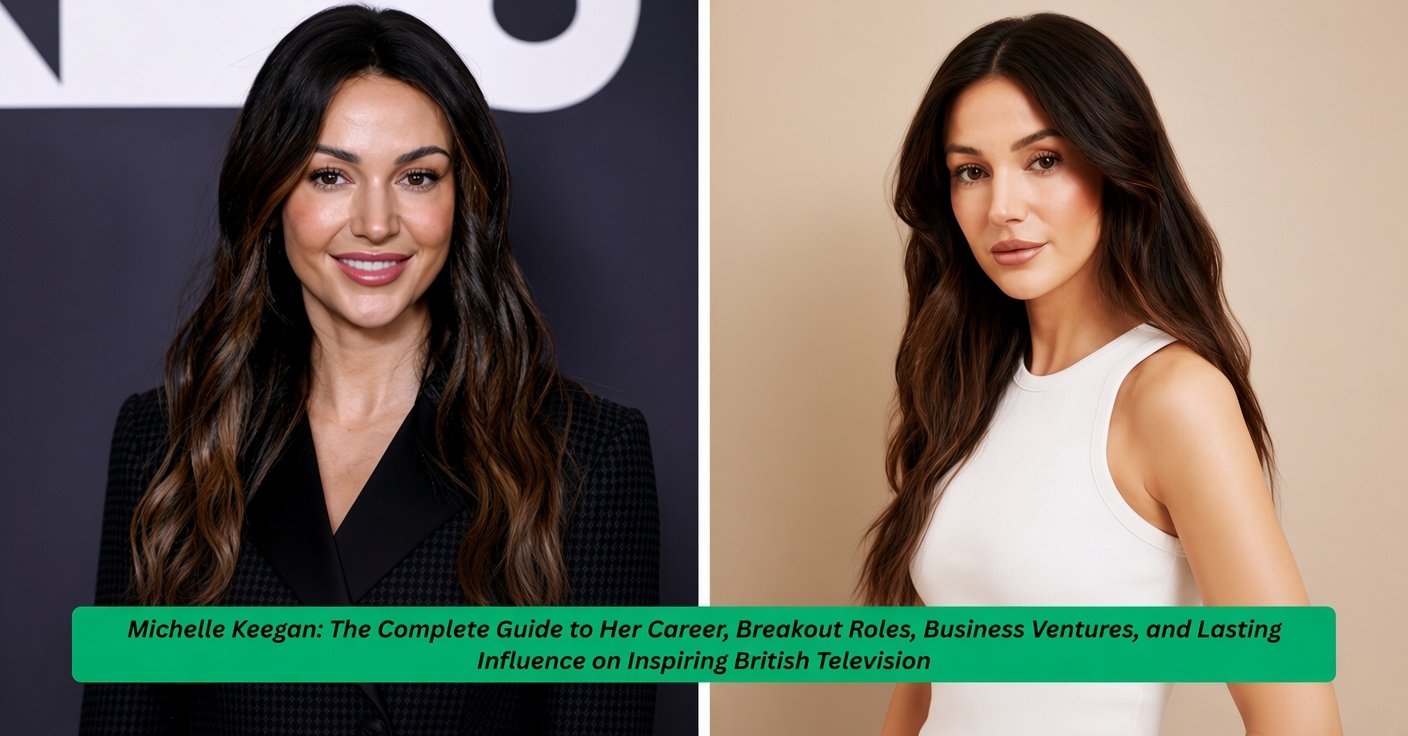
Few British actors have travelled from a Manchester soap set to a global streaming chart as convincingly as Michelle Keegan. Her career is often summarised in a single line, but the real story is more interesting. It is a case study in how a performer can turn early exposure into long-term credibility, choose roles that stretch public perception, and build a business presence without losing the down-to-earth identity that made audiences care in the first place.
This guide takes a close, practical look at that journey. It covers the early years, the television milestones, the acting style, the commercial ventures, and the broader cultural footprint. Whether you are a viewer trying to work out which of her shows to watch next, a student of British television, or an aspiring performer looking for lessons in career design, the sections below aim to give you a clear, well-rounded picture based on publicly documented work rather than gossip.
Who Is Michelle Keegan and Why Does She Matter to British Screen Culture?
Michelle Keegan is an English television actor and fashion entrepreneur, born on 3 June 1987 in Stockport, Greater Manchester. She first became a household name playing Tina McIntyre on ITV’s Coronation Street, then moved into leading roles on BBC One, Sky, and Netflix. That short definition matters for search intent, but it barely captures why she keeps appearing in conversations about the modern British drama landscape.
Her importance comes from a rare combination of qualities. She began in one of the country’s most-watched continuing dramas, a format that often pigeonholes its stars, yet she avoided the trap. She then picked projects that moved her through military drama, ensemble thrillers, heist comedy, and psychological mystery. Along the way she kept a regional identity, with a northern voice and an approachable presence, that gives her performances a grounded quality. For broadcasters, that translates into trust. For viewers, it translates into a sense that the person on screen could plausibly be someone from their own street.
There is also a structural reason her name carries weight. British television has historically had a clear pipeline, with soap first and prestige drama later, but few performers make that transition and then succeed on a streaming platform with worldwide reach. Her trajectory shows how the pipeline can work when the choices are deliberate, and it explains why industry writers, casting directors, and fans return to her career as a reference point.
Early Life and the Road to Acting
Growing up in the Stockport area gave Keegan a cultural foundation that would later show up in her acting. The Greater Manchester region has a long tradition of producing screen talent, and it is home to a thriving production ecosystem around MediaCityUK in Salford and the long-running Coronation Street studios. For a young person with ambitions in front of the camera, the geography made the industry feel less distant than it does for people who grow up far from any production hub.
Like many performers who broke through in the late 2000s, she came up through a mix of persistence and being ready when an opportunity appeared. The audition for Coronation Street was the turning point, and it illustrates a principle worth remembering: careers rarely hinge on a single perfect plan, but they often hinge on being prepared for one specific moment. When the role of Tina McIntyre arrived in 2008, she brought a naturalistic style that suited the show’s emphasis on ordinary lives, ordinary humour, and ordinary heartbreak.
Coronation Street: The Training Ground That Shaped Her Screen Instincts
Coronation Street is often called the toughest acting school in Britain, and the description is fair. Cast members work at a relentless pace, learning large volumes of dialogue, shooting several episodes’ worth of scenes in tight windows, and delivering emotionally complex storylines to an audience of millions. There is very little room for perfectionism. Actors have to make strong choices quickly, trust their instincts, and stay consistent across months of storylines. For Michelle Keegan, playing Tina McIntyre from 2008 to 2014 meant six years of that discipline, and it shows in how efficiently she works on later projects.
Tina was a useful role for an emerging actor because she was not a one-note character. She was funny, vulnerable, stubborn, and sometimes reckless, which gave the performer a wide emotional palette to practise. Soap storylines also teach a specific skill: making heightened events feel believable. When a plot involves shocking twists, the actor’s job is to keep the reaction human. That ability to anchor dramatic events in believable emotion is one of the traits later series, especially thrillers, depend on most.
Her exit from the show in 2014 was also strategically significant. Leaving a long-running soap is a risk, since many actors struggle to be taken seriously afterwards. The answer she found was to leave at a point of audience affection and immediately step into a very different type of role, which is the pattern that would define her career choices.
Our Girl and the Shift Into Leading-Role Drama
The clearest proof of that strategy came with BBC One’s Our Girl, in which she played Georgie Lane, a young army medic serving in dangerous environments. The series moved her from the domestic settings of a Cheshire-style soap street to conflict zones, with physically demanding scenes, tactical training, and a very different emotional register. It was a problem-and-solution moment in career terms. The problem was typecasting, the risk that audiences would only ever see her as Tina. The solution was a lead role so unlike the previous one that comparisons quickly faded.
Preparation for a military drama is rarely glamorous. Performers typically work with military advisers, learn correct handling of equipment, and rehearse movement and communication so that the scenes feel credible to service personnel watching at home. That commitment to authenticity is part of why the show resonated. Viewers were not only following a plot, they were watching an actor who had clearly done the work to inhabit a physically and emotionally demanding job.
Around the same period she also appeared in BBC One’s ensemble drama Ordinary Lies, which explored the small deceptions people build into everyday life. It was a different kind of test, an ensemble piece where character detail matters more than heroics, and it broadened her profile with audiences who enjoy contemporary British storytelling rather than action-led drama.
Brassic, Fool Me Once, and the Streaming Breakthrough
Her next chapter added comedy and psychological thriller to the mix. In Sky’s Brassic, a gritty, funny series about a group of friends in a working-class northern town who get by through small-time hustles, she played Erin. The show’s blend of humour and social realism suits her strengths, and it reminded critics that she can handle comic timing as well as dramatic weight.
The biggest leap came with Netflix’s Fool Me Once, adapted from Harlan Coben’s novel. She played Maya Stern, a former military helicopter pilot whose husband has been murdered, only for her to see what appears to be him on a nanny-cam recording. The premise is classic Coben: a domestic setting, a shocking secret, and twists that reward attentive viewers. The series quickly climbed Netflix’s viewing charts and introduced her work to audiences well beyond the UK, with Adeel Akhtar’s detective character, DS Sami Kierce, adding a strong investigative counterweight.
For Michelle Keegan, the project worked for several reasons. It combined her earlier military-drama experience with a vulnerable, emotionally raw central performance. It also positioned her inside a proven creative brand, since Coben adaptations have a strong record on streaming. From a search and audience-behaviour perspective, the show is also why so many people now look up her name: they finish a binge-worthy thriller and immediately want to know who the lead actor is and what else she has done.
Career Snapshot at a Glance
The table below condenses her major screen work into a quick reference. It is designed for readers who want to understand the range of her roles without reading a full filmography.
| Title | Platform | Genre | Role | Why It Matters |
|---|---|---|---|---|
| Coronation Street | ITV | Continuing drama (soap) | Tina McIntyre | Launched her career and built a large, loyal audience |
| Our Girl | BBC One | Military drama | Georgie Lane | Broke the typecasting risk and established her as a lead |
| Ordinary Lies | BBC One | Ensemble drama | Ensemble cast member | Showcased subtle, character-driven acting |
| Brassic | Sky | Comedy-drama | Erin | Highlighted comic timing and northern authenticity |
| Fool Me Once | Netflix | Psychological thriller | Maya Stern | Brought international streaming recognition |
Reading across the rows reveals the deliberate pattern: every project shifts the genre, the platform, or the emotional demand. That variety is a major reason her career has stayed fresh rather than settling into a formula.

The Craft Behind Michelle Keegan’s Screen Presence
If you ask casting professionals what makes a screen actor believable, many will point to restraint. There is an old casting-room adage that playing it real beats playing it big, and the idea explains a lot about her approach. Her performances tend to rely on small physical choices, a pause before a line, a look held slightly longer than expected, rather than theatrical emphasis. On camera, especially in close-up-heavy thrillers, that subtlety reads as honesty.
Another hallmark is emotional accessibility. Many of her characters are ordinary people placed under extraordinary pressure, whether a medic in a war zone or a widow pulled into a conspiracy. Because she does not overplay the extraordinary, viewers stay attached to the person rather than the plot device. This is the same principle behind many great thriller performances: the audience worries about the character first and the twist second.
Her regional accent and delivery also contribute to what analysts of screen performance call perceived authenticity. In an industry that has historically favoured neutral, southern-inflected speech in prestige roles, a clearly northern voice signals a specific place, class background, and sense of humour. That specificity is not a limitation. It is an asset, because specificity is what makes fictional worlds feel lived-in.
Fashion, Business Ventures, and the Value of a Trusted Personal Brand
Beyond acting, Keegan has built a significant commercial profile, most visibly through her long-running fashion collaboration with the retailer Very, following earlier work with Lipsy. Celebrity fashion lines are common, but many fade quickly because they feel like logo-licensing exercises. The ones that last tend to share a few features: design input from the named person, pricing aligned with the audience’s real budget, and consistency with the public image of the collaborator.
That alignment is where her brand strategy stands out. Michelle Keegan‘s fashion partnerships lean on the same qualities as her acting: approachability, practicality, and a sense that the clothes are meant for real life rather than red carpets. It is a textbook example of brand-market fit. Her audience largely consists of viewers who value relatability, and the product range reflects that.
There is a broader lesson for anyone studying personal branding. A public figure’s commercial ventures work best when they extend an existing reputation rather than contradict it. If an actor is known for authenticity on screen, a heavily artificial marketing persona would create friction. By keeping a consistent identity across acting and business, she reduces that friction and strengthens trust with both audiences and partners.
Privacy, Public Image, and Why Audiences Trust Her
Trust is a currency in entertainment, and it is built over years. Keegan married television presenter Mark Wright in 2015, and while their relationship has attracted media interest, she has generally kept the details of her private life measured and selective. That approach matters for reputation. Public figures who overshare often see their professional work overshadowed by personal narrative, while those who set boundaries tend to keep the focus on the craft.
There is a practical reputation-management principle at work here. Audiences tend to trust people whose public statements and actions align over time. Michelle Keegan has cultivated an image built around hard work, humour, and groundedness, and her choices, from the roles she accepts to the brands she partners with, generally reinforce that image rather than contradict it. In SEO terms, that is topical authority applied to a human being: repeated, consistent signals that make the entity easy to understand and easy to trust.
It is also worth noting how she handles the inevitable scrutiny that follows fame. Rather than reacting to every headline, she tends to let the work speak. For readers interested in media literacy, this is a useful contrast with attention-driven celebrity strategies and a reminder to rely on primary sources, official interviews, and verified production information when researching any public figure.
What Aspiring Actors Can Learn From Her Path
One of the most valuable takeaways is how to handle the soap-to-drama transition. The common problem is that early fame can lock performers into a single identity. The solution modelled by her career is to leave at a peak of goodwill, choose a dramatically different next role, and keep varying genre and format. Instead of chasing prestige for its own sake, she picked projects that tested new skills, such as physical action in Our Girl and sustained suspense in Fool Me Once.
A second lesson concerns preparation. Roles involving military settings or thriller mechanics require research, physical readiness, and a willingness to be corrected by experts. Aspiring actors sometimes assume talent alone carries a performance, but credibility usually comes from the unglamorous work behind the scenes: training, reading, rehearsing, and asking questions. Think of it like learning a musical instrument. Natural ear helps, but the audience only hears the result of thousands of quiet practice hours.
Finally, there is the business lesson. Actors are, in effect, small enterprises. Building a secondary income stream through a considered commercial partnership can provide stability between projects and creative freedom to say no to roles that do not fit. The key is coherence: choose ventures that feel like natural extensions of your public identity rather than random opportunities.
Her Cultural Impact on British Television and Streaming
Her career maps onto a larger shift in how British drama is made and distributed. When she started on Coronation Street, ITV, the BBC, and a handful of other broadcasters dominated the conversation. Today, Sky, Netflix, and other streamers commission British stories for global audiences, and performers with recognisable faces and strong regional credibility are especially valuable. The Coben adaptation is a strong illustration of the trend, since a British-set thriller built around a northern-born lead found an international audience.
Her work also contributes to the ongoing conversation about regional representation on screen. For a long time, northern voices were often confined to soaps and comedies, while prestige drama defaulted to a narrower set of accents and settings. Series like Brassic and Fool Me Once, and lead performances like hers, help normalise a broader range of British identities across every genre, from crime to comedy to conspiracy thrillers.
There is a soft-power dimension too. Popular series shape how the world perceives a country, and a well-crafted British thriller can send viewers searching for locations, cast members, and the original novels. That ripple effect benefits authors, production companies, and regional economies, and it is part of why a single successful adaptation can reshape the public profile of everyone involved.
Frequently Asked Questions
What is Michelle Keegan best known for?
Michelle Keegan is best known for playing Tina McIntyre on Coronation Street, Georgie Lane in BBC One’s Our Girl, and Maya Stern in Netflix’s Fool Me Once. Among general audiences, the Netflix thriller is often the entry point, while longtime viewers still associate her strongly with her soap years. Beyond acting, she is also recognised for her fashion collaboration with Very.
How did she move from soap opera to leading roles?
The transition came from a deliberate sequence of choices. After leaving Coronation Street in 2014, she moved straight into Our Girl, a role that was very different in setting, tone, and physical demands. That move reduced the typecasting risk that soap actors commonly face, and later projects across comedy, ensemble drama, and thriller reinforced the versatility.
Where can I watch her most popular shows?
Availability changes by region and over time, so it is best to check the current listings on each platform’s website. Generally, Coronation Street belongs to ITV’s ecosystem, Our Girl and Ordinary Lies are associated with BBC iPlayer, Brassic with Sky, and Fool Me Once with Netflix. Searching the title on a streaming aggregator is the quickest way to confirm what is available in your country.
Why did Fool Me Once become such a talking point?
The series combines a strong premise, a well-known author in Harlan Coben, and a lead performance that keeps the emotional stakes personal. Viewers were drawn in by the nanny-cam mystery, and the fast pacing suited binge viewing. For those researching Michelle Keegan, it also marked a visible step from national fame to international streaming recognition.
Does she run a business outside acting?
Yes. She has a long-standing fashion collaboration with Very and previously worked with Lipsy, designing ranges aimed at everyday shoppers rather than luxury buyers. The partnership fits her broader public image, which emphasises practicality, relatability, and accessibility.
What can other actors learn from her career?
The main lessons are to vary your roles, invest in preparation, and keep your public identity consistent. Her path shows that leaving a comfort zone at the right moment, and choosing projects that stretch different skills, can extend a career far beyond an initial breakthrough.
Conclusion
Michelle Keegan’s career is a strong example of how talent, timing, and strategic choices combine over time. From the demanding rhythm of Coronation Street to the military realism of Our Girl, the comic energy of Brassic, and the high-tension storytelling of Fool Me Once, she has steadily widened what audiences expect from her while keeping the grounded, approachable quality that made her popular in the first place.
The final insight is simple and useful for viewers, aspiring performers, and brand builders alike: longevity rarely comes from reinventing yourself every year, but from staying recognisably yourself while continually adding new dimensions. That is the pattern that defines the career of Michelle Keegan, and it is why her name continues to draw interest long after her first television break.