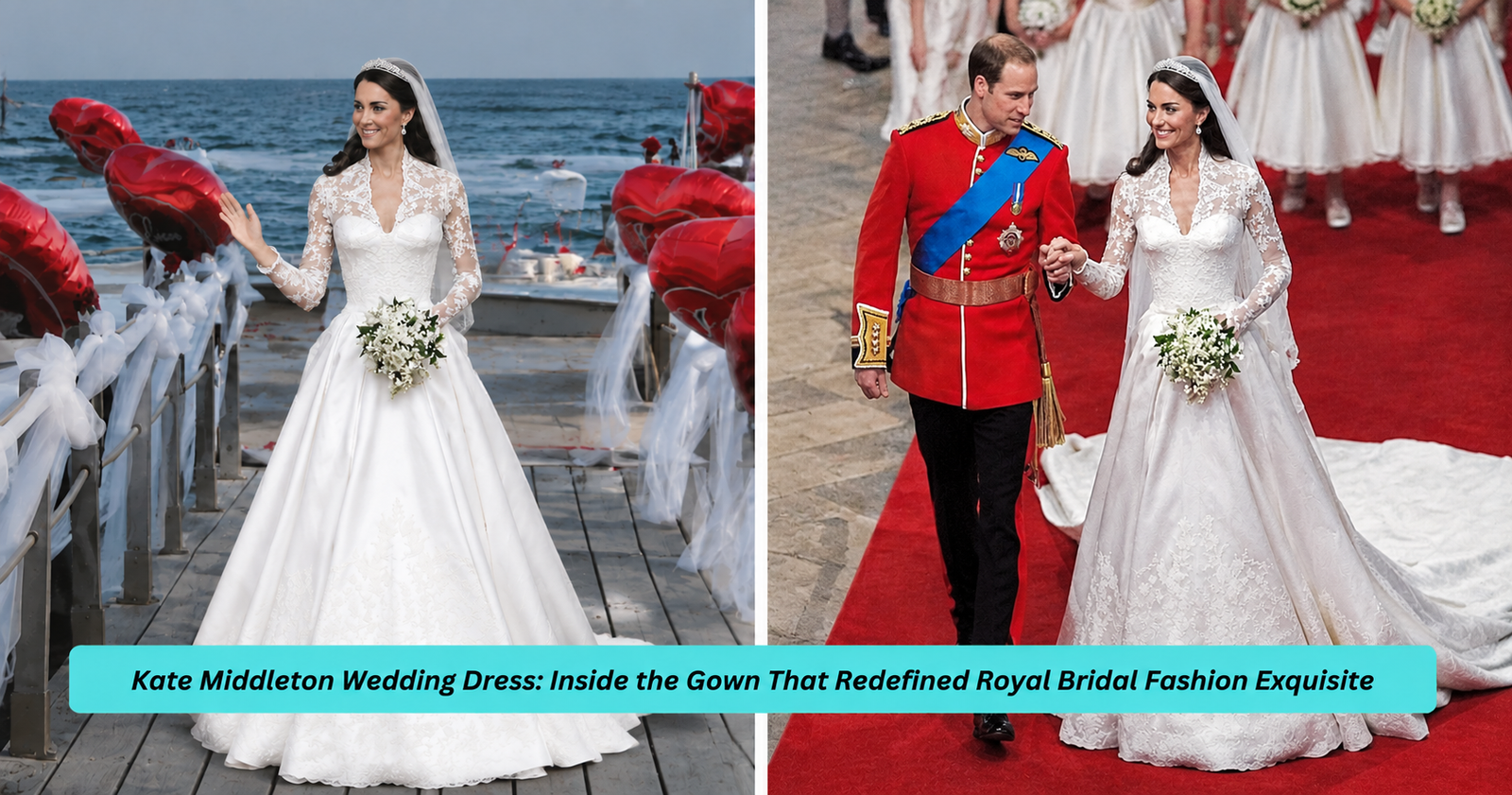
More than a decade after Westminster Abbey, the Kate Middleton wedding dress remains one of the most searched, studied, and imitated bridal gowns in modern history. It wasn’t just a dress for a single day — it became a genuine reference point for bridal fashion, influencing designers and brides around the world for years afterward. This guide breaks down every meaningful detail behind the gown, from the designer who created it to the hidden symbolism stitched into its lace, and explains exactly why it continues to hold such lasting cultural weight.
The Kate Middleton Wedding Dress: A Quick Overview
Before diving into the finer details, it helps to establish the basic facts that made this such a significant fashion moment. The Kate Middleton wedding dress was worn on April 29, 2011, when Catherine Middleton married Prince William at Westminster Abbey in front of a global television audience estimated in the hundreds of millions. The gown was created by Sarah Burton, the creative director of the British fashion house Alexander McQueen, marking one of the most closely watched design commissions in recent fashion history.
What made this moment different from typical celebrity wedding coverage was the sheer scale of anticipation surrounding the reveal. Unlike most high-profile weddings where details leak gradually in the months beforehand, the identity of the designer and the appearance of the Kate Middleton wedding dress were kept almost entirely confidential until she stepped out of the car at Westminster Abbey. That level of secrecy, paired with the historic significance of a future queen’s wedding gown, created a genuine cultural event around a single piece of clothing — something that rarely happens in fashion outside of major royal occasions.
Choosing Sarah Burton and Alexander McQueen
The decision behind who would design the Kate Middleton wedding dress was itself a major story. Sarah Burton had only recently stepped into the role of creative director at Alexander McQueen, having taken over the house after founder Lee McQueen’s death in February 2010. Handing her the most scrutinized bridal commission of the decade was, in many ways, a statement about British craftsmanship and a vote of confidence in her design vision at a pivotal moment for the brand.
According to an official statement released by Buckingham Palace, the choice reflected specific priorities beyond simply picking a famous name. The Palace explained that Middleton selected Alexander McQueen for the beauty of its craftsmanship and its respect for traditional workmanship, adding that she wanted her dress to combine tradition and modernity with the artistic vision associated with the house. This detail matters because it reframes the Kate Middleton wedding dress as a deliberate creative collaboration rather than a simple designer booking — Burton and Middleton reportedly worked closely together throughout the process, ensuring the final gown reflected the bride’s personal style rather than existing purely as a showcase for the brand’s signature aesthetic.
The Design Details Behind the Kate Middleton Wedding Dress
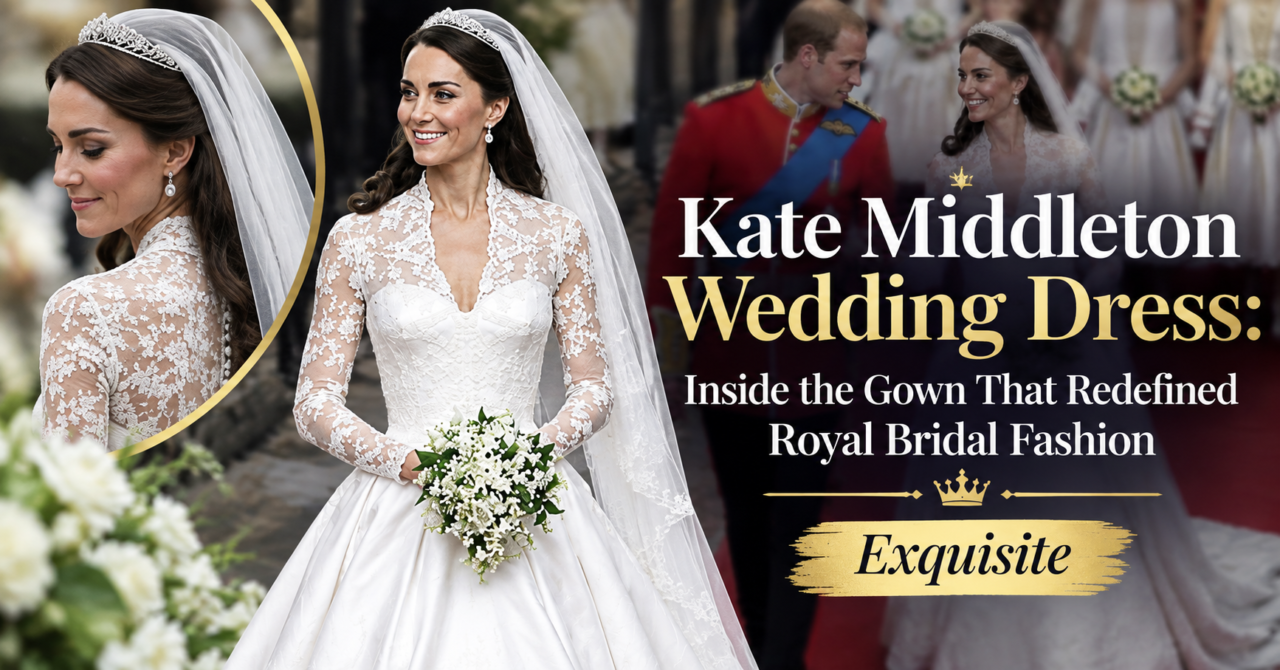
Once revealed, the Kate Middleton wedding dress became an instant study in balancing traditional royal bridal codes with fresh, modern silhouette choices. The gown was constructed from ivory satin gazar, a structured silk fabric that gave the dress its clean, sculpted shape, with a Victorian-inspired corset bodice that was narrowed at the waist and subtly padded at the hips to create the fitted, hourglass silhouette Middleton was known for.
The skirt itself was designed to evoke the shape of an opening flower, flowing outward into a dramatic yet controlled A-line silhouette rather than the enormous, voluminous skirts seen in some earlier royal weddings. Down the back of the bodice ran a row of fifty-eight tiny organza-covered buttons, fastened using delicate rouleau loops — a detail that added a distinctly vintage, handcrafted quality to an otherwise contemporary silhouette. The train measured just under nine feet, considerably more restrained than Princess Diana’s twenty-five-foot train from 1981, reflecting a broader shift toward practicality and modern elegance in how the Kate Middleton wedding dress was ultimately constructed.
The Lace, Craftsmanship, and Hidden Symbolism
Arguably the most celebrated element of the Kate Middleton wedding dress was its lacework, which involved genuinely historic techniques rarely used at this scale in contemporary fashion. The bodice and long sleeves featured hand-cut English lace alongside French Chantilly lace appliqués, produced using the traditional Carrickmacross lace-making method, a technique with deep roots in royal bridal wear. This lace was created in partnership with the Royal School of Needlework, whose artisans hand-applied each floral motif individually onto the silk tulle base.
This level of craftsmanship wasn’t just about visual impact — it carried genuine symbolic weight. Individual flowers within the lace design were reportedly chosen to represent each of the nations of the United Kingdom, weaving a quiet layer of national symbolism into the gown’s most delicate detailing. Speaking about the process afterward, Sarah Burton reflected on the emotional weight of the project, saying, “I loved making the dress, I loved adapting my ideas to suit the person and the occasion.” That kind of personal investment from the designer helps explain why the Kate Middleton wedding dress reads less like a corporate fashion statement and more like a genuinely bespoke piece of craftsmanship built specifically around one bride’s story.
How the Dress Stayed a Secret Until the Big Day
Keeping any high-profile wedding dress secret is difficult, but maintaining total secrecy around the Kate Middleton wedding dress in the age of social media and twenty-four-hour news coverage was an extraordinary logistical achievement. Speculation ran wild in the months leading up to the wedding, with various British designers — including Bruce Oldfield and Temperley London — rumored as possible candidates before Sarah Burton’s involvement was ever confirmed.
The secrecy nearly unraveled the night before the wedding, when Burton was photographed slipping into the Goring Hotel, where the Middleton family was staying, in an attempt to make final adjustments unnoticed. Despite disguising herself with a fur-hooded coat, an observant journalist recognized her by her distinctive studded leather belt and signature ballet flats, generating a fresh wave of speculation just hours before the reveal. This near-miss adds an interesting layer to the story of the Kate Middleton wedding dress, showing just how intensely every visual clue was being tracked by media outlets desperate for an early look at what would become one of the most photographed garments of the century.
The Kate Middleton Wedding Dress Compared to Other Royal Gowns
Understanding the Kate Middleton wedding dress in isolation only tells part of the story — its real significance becomes clearer when placed alongside other iconic royal bridal gowns. The design intentionally referenced elements from two historically significant dresses: Grace Kelly’s 1956 wedding gown and the gown worn by the then-Princess Elizabeth at her own wedding, both known for their elegant, structured silhouettes and long sleeves.
At the same time, the dress represented a clear departure from Princess Diana’s 1981 gown, which featured an enormous puffed silhouette and dramatically long train reflecting the maximalist bridal trends of that era. By choosing a more streamlined silhouette with a shorter train and a fitted bodice, the Kate Middleton wedding dress signaled a broader shift in bridal fashion sensibilities — one that favored tailored elegance over sheer volume. This comparison matters for understanding modern bridal trends more broadly, since many contemporary wedding gowns still draw more heavily from Middleton’s fitted, lace-driven silhouette than from Diana’s voluminous 1980s aesthetic.
Why the Kate Middleton Wedding Dress Became a Bridal Fashion Blueprint
Very few wedding dresses genuinely reshape bridal fashion trends on a global scale, but the Kate Middleton wedding dress did exactly that. In the years following the wedding, bridal designers reported a measurable surge in demand for lace sleeves, fitted corset-style bodices, and more modest necklines — a direct response to how strongly consumers responded to the gown’s silhouette.
This influence extends well beyond simple copycat designs. The dress essentially validated a more understated, craftsmanship-focused approach to bridal fashion at a time when many high-profile weddings still leaned toward maximalist, statement-driven gowns. Think of it as a similar cultural shift to how a single influential runway collection can redirect an entire season’s design language — except in this case, the impact rippled through the bridal industry for the better part of a decade. Wedding dress retailers and designers alike continue to reference the Kate Middleton wedding dress when discussing the enduring popularity of lace sleeves and fitted silhouettes in contemporary bridal collections.
What Brides Can Learn From the Kate Middleton Wedding Dress
Beyond its historical and cultural significance, the Kate Middleton wedding dress offers genuinely practical lessons for brides planning their own weddings today. One of the clearest takeaways is the value of choosing a silhouette that flatters your body type rather than simply following current trends — the fitted bodice and structured skirt were specifically tailored to complement Middleton’s frame rather than chasing a generic bridal template.
Another lesson lies in the power of personal symbolism woven into design choices. The individual floral motifs representing different nations, along with careful nods to family history through the veil and tiara, show how a wedding dress can tell a personal story without needing to be loud or overly embellished. For brides working with a designer today, the Kate Middleton wedding dress serves as a useful case study in collaborative design — proving that the most memorable results often come from genuine back-and-forth between designer and bride, rather than simply selecting an off-the-rack gown from a existing collection.
Kate Middleton Wedding Dress at a Glance
| Detail | Information |
|---|---|
| Designer | Sarah Burton for Alexander McQueen |
| Wedding date | April 29, 2011 |
| Venue | Westminster Abbey, London |
| Fabric | Ivory satin gazar with silk tulle lace overlay |
| Lace technique | Carrickmacross lace, hand-applied by the Royal School of Needlework |
| Back detail | 58 organza-covered buttons with rouleau loops |
| Train length | Just under 9 feet |
| Reported cost | Approximately £250,000 |
Frequently Asked Questions
Who designed the Kate Middleton wedding dress?
The Kate Middleton wedding dress was designed by Sarah Burton, the creative director of Alexander McQueen, who had taken over the role shortly before the wedding following founder Lee McQueen’s death. Burton worked closely with Middleton throughout the design process to create a gown that balanced traditional royal bridal elements with the house’s contemporary artistic sensibility.
How much did Kate Middleton’s wedding dress cost?
The Kate Middleton wedding dress is reported to have cost approximately £250,000, a figure believed to have been covered by Middleton’s parents, Carole and Michael Middleton. The high cost reflects the extensive hand-craftsmanship involved, particularly the individually hand-applied lace appliqués created by artisans at the Royal School of Needlework.
What fabric was the Kate Middleton wedding dress made from?
The gown was constructed primarily from ivory satin gazar, a structured silk fabric known for holding shape well, layered with silk tulle featuring hand-applied Carrickmacross lace. This combination gave the Kate Middleton wedding dress both its sculpted silhouette and its delicate, romantic surface detailing.
How was the Kate Middleton wedding dress kept secret before the wedding?
Buckingham Palace and the design team maintained strict confidentiality throughout the process, with only a small circle of people aware of the designer’s identity or the dress’s appearance before the wedding day. The secrecy nearly broke the night before the ceremony, when Sarah Burton was briefly recognized entering the Middleton family’s hotel despite wearing a disguise.
Why is the Kate Middleton wedding dress still so influential today?
The Kate Middleton wedding dress remains influential because it helped popularize a more fitted, lace-sleeved bridal silhouette that continues to dominate modern wedding fashion. Its blend of historical craftsmanship with a modern, tailored shape offered an alternative to more voluminous royal wedding gowns of the past, and its design language still appears regularly in contemporary bridal collections.
Conclusion
More than a decade later, the Kate Middleton wedding dress endures not simply because of who wore it, but because of the extraordinary craftsmanship, symbolism, and design collaboration behind it. From the hand-applied lace representing the nations of the United Kingdom to the carefully balanced silhouette that referenced royal history while feeling entirely modern, every element reflects genuine intentionality rather than mere spectacle. For anyone planning their own wedding or simply studying what makes bridal fashion truly timeless, the Kate Middleton wedding dress remains one of the clearest examples of how thoughtful design can outlast a single event and shape an entire industry for years to come.